
Weld County's Directory Shelf by Year
The historical shelf begins with a few named volumes. No complete run exists. The 1871 Rocky Mountain Directory and Colorado Gazetteer offers an early Colorado lead, recording name, occupation, and residence fields. Later Greeley titles follow it. F.C. Messinger issued the 1892 Greeley City Directory. Greeley Tribune Print produced the April 1903 edition, giving researchers a dated foothold before later annual issues are tested.
| Collection | Years | Where Held | Access |
|---|---|---|---|
| Rocky Mountain Directory and Colorado Gazetteer | 1871 | WCMI source description; UNC Michener Archives, call F/780/W21 | Online source lead; inspect the original in the reading room |
| F.C. Messinger Greeley City Directory | 1892 | Hazel E. Johnson Research Center and WCMI | In-person copy with an online index lead |
| Greeley City Directory | April 1903 | Hazel E. Johnson and Centennial Park Library/LINC | WCMI points to printed pages 24 and 32 |
| Greeley local directory issues | Annual pattern; endpoint not located | Hazel E. Johnson, Centennial/LINC, and local collections | Request the cataloged year list and reverse section |
| Greeley Tribune | November 16, 1870 to present | High Plains Library, Hazel E. Johnson, CHNC, and newspaper databases | Microfilm, bound volumes, and changing digital runs |
The Greeley annual pattern holds. A final printed year is not established. Ask the library or research center for a cataloged run. Do that before treating any unlisted year as an endpoint. Later reverse and criss-cross years are also open questions. Turning a missing year into a false ending is the easy mistake. The Weld County Master Index, or WCMI, bridges the gaps. It supplies source codes and repository clues. For current address-keyed records, the Weld County street directory follows parcel and recorder keys. It does this instead of rebuilding the historical shelf.
Where Weld County City Directories Survive
Several institutions keep the county's directory volumes within reach. High Plains Library District's genealogy and history service is the main access route, licensing Heritage Hub obituary and death-notice searches, HeritageQuest census and local-history material, NewspaperARCHIVE, and more. Its local-history collection adds digitized Weld County images, the Kersey Collection, Weldcast oral histories, and newspaper preservation. Some databases require a library card or in-library use. Physical directory and microfilm access depends on staff holdings.
The Hazel E. Johnson Research Center at 714 8th Street in Greeley is the destination for photographs, manuscripts, historic properties, genealogy material, and directory volumes. Nearby, the Greeley History Museum reports nearly 90,000 collection items. It also lists more than 40 historic buildings or sites. UNC Archives and Special Collections sits at Michener L119, 501 20th Street. It offers finding aids, public reading-room access, and DigitalUNC. A Colorado State University finding aid covers Weld and Greeley material from 1856-1992, including directories and reports. When a local copy is not digitized, State Archives finding aids add probate, naturalization, road, and government context.
Access keeps changing. The library district has announced an archive at 2650 West 29th Street in Greeley. It will house the complete Greeley Tribune collection. A digital-preservation lab opens there on June 27, 2026. That physical archive matters for late-nineteenth-century bound volumes, images, and microfilm whenever a keyword search misses a name or an address.
The High Plains Library's collection reference page displays the local-history shelf:
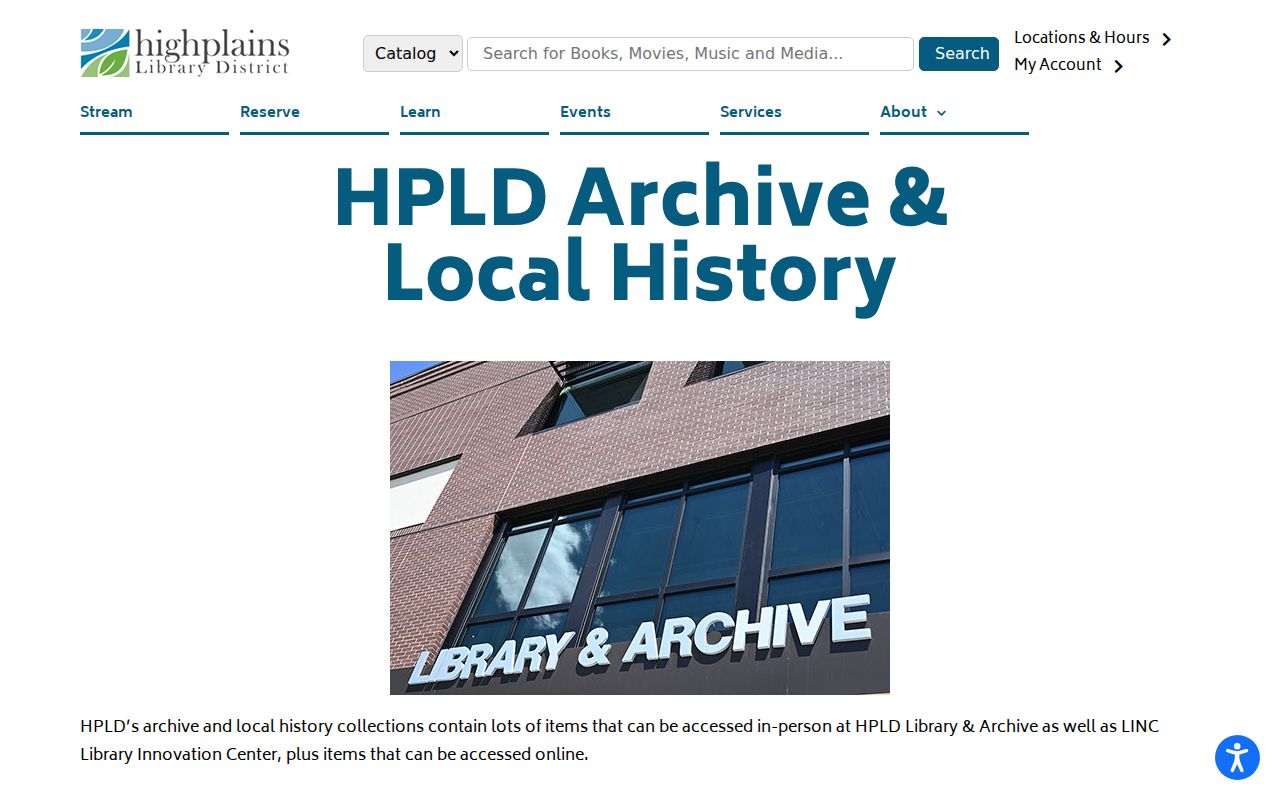
The image belongs with the access trail. A digital collection points to a source. The library or archive holds the volume where the original entry is actually read.
Inside a Weld County Directory Line
A directory line is a cluster of clues. The alphabetical section gives a name, a spouse in parentheses, and a residence. Household detail and occupation round it out. Children or ages appear sometimes. A business section can add an affiliation or an advertisement. An address or reverse section starts from a street instead of a person. The printed abbreviation key still governs how the line reads.
| Name | Surname, initials, and the spelling used in that edition |
|---|---|
| Spouse or relationship | Parentheses, widow notation, or another household clue when printed |
| Address | House number, street, residence abbreviation, and sometimes a boarding notation |
| Occupation or affiliation | Historical work, organization, or business line tied to the entry |
| Owner or renter mark | Copy the mark only when that directory run actually prints one |
| Page and source code | Printed page, edition year, and WCMI source label for a repeatable citation |
- Criss-cross directory
- An address-order list that starts with a street or number and points toward the person recorded there.
- Householder index
- A list organized around the main household line, useful when several people share one residence.
- Abbreviation key
- The volume's explanation of short forms such as residence, boarding, widow, or business terms.
- Source code
- WCMI's label for the underlying edition or repository, which helps separate an index pointer from the original book.
Ownership and residence are different questions. A directory line places a person at an address for one publication year. A recorder instrument answers title questions. A newspaper may add a death or marriage notice, so keep each record's role separate when a name looks familiar.
WCMI Pointers Into a 1903 City Directory
WCMI counts 1,138,194 names. They come from 451 sources. That count dates to the October 14, 2023 update. Each result carries a name, optional details like age, spouse, or land, a repository location, and a source code. It does not silently correct spelling, so a variant may be the clue that opens the next record.
The 1903 sample proves the point. One line reads ABBOTT W S ... manager Modern Woodmen of America Greeley ... 24 ... 1903GreeleyCityDir. Another reads ABBOTT W S (Emelia) ... painter res 529 5th Greeley ... 32 ... 1903GreeleyCityDir. The initials match. The affiliation and residence do not. Treat them as two leads. Printed pages, household clues, and related records establish how they connect.
The practical inventory is short. Expect surname and initials, a spouse in parentheses, affiliation or occupation, city and residence, street number, printed page, source code, and edition year. It is an index route to the 1903 book at page 24 or page 32, not a modern statement about a living person, with the original volume held through the local collection route.
Weld County City Directory Clues in Newspapers
Colorado Historic Newspapers Collection opens a digital path into Greeley Tribune issues. The paper's microfilm run starts with the issue of November 16, 1870. It continues to the present. Digital coverage varies by database. High Plains Library District acquired the archive in 2019. The late-nineteenth-century bound volumes sit preserved in a vault. Heritage Hub, NewsBank, and NewspaperARCHIVE add further notice runs through the library's genealogy service. At the Greeley History Museum and Hazel E. Johnson Research Center, photographs, oral histories, and manuscript material round out the local record.
A newspaper search takes patience. Try a married woman under her husband's first name. Test every abbreviation. Search words tied to death, marriage, or a relationship rather than one exact spelling. A microfilm reader, a bound volume, a digitized page, and a staff-assisted lookup are all legitimate channels for the Weld County record. They may not return the same years.
A notice supports a directory entry. It is not a certified vital record. Preserve the issue date, page, headline or search phrase, and the address wording. Those details can tie a directory entry to a cemetery, probate file, or parcel trail. Do not treat one short notice as a whole biography.
Weld County City Directories Meet Census
The federal census gives a household cross-check for any Weld County directory entry. Under the 72-year rule, the 1950 census is public by the 2026 project date. The 1960 count is not. WCMI points to specific reels: the 1885 Colorado State Census, the 1900 Weld reel T623-130, the 1910 reels T624-126 volumes 40 and 41, the 1920 Greeley reel T625-173, and the 1930 reels T626-251 and T626-252 with enumeration districts. High Plains Library databases and local index clues offer routes into those records.
A directory may appear every year. A census comes once a decade. A volume's date can fall before or after the census visit. A resident may be listed at a workplace, boarding place, or household under a different name form. Compare the address line, spouse or child clue, age, birthplace, and enumeration district. The match grows stronger when the newspaper and WCMI source line point to the same period.
For a historical family question, aim for a set of aligned citations rather than one perfect hit. Record the directory page, census schedule or reel, source code, and any spelling change. Do this before moving to the next year.
Trace a Weld County Household by Directory
A street or house number is the known clue? Start with the address section. A surname is the known clue? Start with the alphabetical section instead. Either way, keep the exact printed spelling, number, abbreviation key, and page before moving to another edition of the Weld County directory.
- Find the first useful appearance and copy the name, address, spouse or household clue, page, and source code.
- Move one directory backward and forward, then test the same person in the alphabetical section for spelling and address changes.
- Compare the entry with the nearest census, using age, birthplace, relationships, and enumeration district to control same-name matches.
- Search the Greeley Tribune, Heritage Hub, and local-history collections for marriage, death, move, or address phrases.
- Close the trail with a cemetery, probate, parcel, or recorder source, while keeping ownership and residence as separate findings.
A person who vanishes from one volume may simply have moved. Death is another possibility. A name change can explain the gap in a Weld County directory run. So can a publisher's omission or a missing issue. A spouse notation or widow entry helps separate those possibilities from one another. So does a business change, obituary, or later address.
Note: A missing annual directory entry may reflect a delayed update. It could also mark a move, a death, or a publication gap rather than one certain event.
Weld County Directory History Timeline
Weld County's record trail is a layered chronology. The dates in this timeline explain why a historical directory search can move from an online index to a shelf, a microfilm reader, or an archive finding aid.
- 1870: Greeley Tribune microfilm begins on November 16, creating a newspaper trail beside later editions.
- 1871: The Rocky Mountain Directory and Colorado Gazetteer supplies an early name, occupation, and residence source.
- 1892: F.C. Messinger's Greeley City Directory adds a named local volume.
- April 1903: The Greeley City Directory appears in the WCMI sample with pointers to pages 24 and 32.
- Annual pattern: Greeley Tribune-Republican Publishing Co. issues are documented, but the endpoint was not located.
- October 14, 2023: WCMI reports 1,138,194 names from 451 sources in its update.
- June 27, 2026: HPLD's new archive adds a physical preservation route for the Tribune and local collections.
Before Greeley became the permanent seat in 1877, Weld County kept its offices in St. Vrain, then Latham, then Evans. Each move scattered records a little further. A WPA/ERA project led by George E. Horne later re-filed authentic county documents spanning 1859 to 1933, which is why an early record's archival arrangement may not match its index label. The 1914 courthouse story and the 1865 recorder floor explain even more about why older records now sit spread across different offices and repositories.
Weld County Directories and Sanborn Sheets
Sanborn maps give a physical check for an address found in a directory. Greeley sheets exist for June 1886, December 1887, January 1891, October 1895, January 1901, January 1906, October 1909, and January 1918. Later sheets cover April 1927, a September 1946 update, and an August 1968 update. They show building footprint, use, and materials. They also show street numbering and neighborhood change. They are not a complete list of residents.
Align a directory page with the nearest Sanborn sheet. Then compare the street spelling and building position with the parcel or legal description. The Greeley museum, High Plains Library, local historic-survey references, and Denver Public Library hold these sheets. A directory can name an occupant. A Sanborn sheet can show the structure. A recorder instrument can establish a transfer. The three sources answer different questions. Retain all three citations.