
Weld County's Earlier Address Sources
Previous residents leave different traces depending on whether the question is about title, household presence, a building, or a death and estate. Weld County's recorder index reaches back farther than the modern parcel report, while directories, census schedules, newspapers, maps, permits, obituaries, and probate answer separate parts of the same address story.
| Source | Years It Covers | Where Held | What It Shows |
|---|---|---|---|
| Weld County recorder index | 1865-present | EagleWeb, Self-Service Recording Search, and the Clerk and Recorder | Grantor, grantee, reception, date, instrument, legal description, and related-document trail |
| Assessor parcel report | Current records; sample report tax year 2026 | Weld Property Data Search and property report | Owner list, situs and mailing address, parcel keys, building fields, values, and document history |
| Greeley city directories | 1892 and April 1903 specifically located | Hazel E. Johnson, Centennial/LINC, and WCMI | Occupants, addresses, spouses, household clues, and historical affiliations |
| Reverse or criss-cross directories | Exact years not located | High Plains Library, Hazel E. Johnson, and local collections | Address-to-occupant leads that need a cataloged year and printed-page check |
| Federal and Colorado census | Through 1950 public; 1885 Colorado State Census indexed | High Plains Library databases, WCMI, and census repositories | Household names, ages, relationships, birthplace, and address-area context |
| Greeley Tribune | November 16, 1870-present | High Plains Library, Hazel E. Johnson, CHNC, and newspaper databases | Death, marriage, move, business, and address clues |
| Sanborn maps | 1886, 1887, 1891, 1895, 1901, 1906, 1909, 1918, 1927, 1946 update, 1968 update | Greeley museum, library, Denver Public Library, and survey references | Building footprint, use, materials, street numbering, and change over time |
| Building permits | Coverage gap; complete public index not located | City or county planning route and a narrow CORA request | Possible alteration or construction date when a custodian releases a record |
| Obituary and probate records | Varies by newspaper, cemetery, court, and archive series | Heritage Hub, CHNC, Linn Grove, 19th Judicial District, and State Archives | Death, family, representative, heir, and final-address clues |
Start with the current parcel when the address is known today. Start with a directory or newspaper when the question is about a historical household. For previous residents, use probate or an obituary when a prior resident died or transferred property through an estate. The directory collections themselves are described on the Weld County city directory page, while the backward chain below joins those clues to recorded instruments.
Walk the Weld County Deed Chain Backward
The exact Weld County backward chain begins with the current parcel and moves through the recorder's party index. Keep the assessor account and legal description beside every result. The legal description survives many street-name changes and helps separate a real predecessor from a same-name match.
- Search the current street address in the Assessor and save the account, parcel, legal lot, block, subdivision, section-township-range, owner list, and mailing address.
- Open the property report's document-history rows and identify the current owner's purchase instrument.
- Search the recorder for the current owner as grantee, then read the seller or grantor named in that transfer.
- Search that seller as a grantee in an older instrument and compare the reception number, legal description, date, and related-document links.
- Repeat the backward search, testing name variants and legal-description terms when a street string produces no result.
- When the online index or image ends, request the instrument from the Clerk and Recorder or ask State Archives staff about the earlier record group.
- Grantor
- The party giving or transferring an interest in the instrument.
- Grantee
- The party receiving the interest named in the instrument.
- Chain of title
- The linked sequence of recorded transfers that connects one owner to an earlier owner.
- Legal description
- The parcel wording used in the instrument, such as a subdivision, lot, block, or section-township-range reference.
- Criss-cross directory
- An address-order directory that can identify a historical occupant even when the parcel owner is different.
The recorder describes its index as a catalog rather than a legal opinion. For previous residents, search fields include grantor, grantee, reception number, recording date, document type, subdivision, block, lot, and legal description. Basic names use last-name-first order; Advanced search accepts any words and supports wildcards and required or excluded terms. The verified online floor is 1865, so an earlier Weld transaction becomes an archive or deed-book question.
The Weld County recording FAQs provide the custodian route when an indexed instrument needs an original or a certified copy.
The Assessor Snapshot for One Weld Parcel
The Weld County Assessor Property Data Search uses one required Search field with a 50-character maximum. It accepts an owner name, full or partial address, account, subdivision, parcel, legal description, or section-township-range. A subdivision can be paired with block and lot, and a parcel may be entered in the county's hyphenated format. No payment or login is required.
The sample Weld parcel report for Account R8975713 demonstrates the fields that make a previous residents search possible:
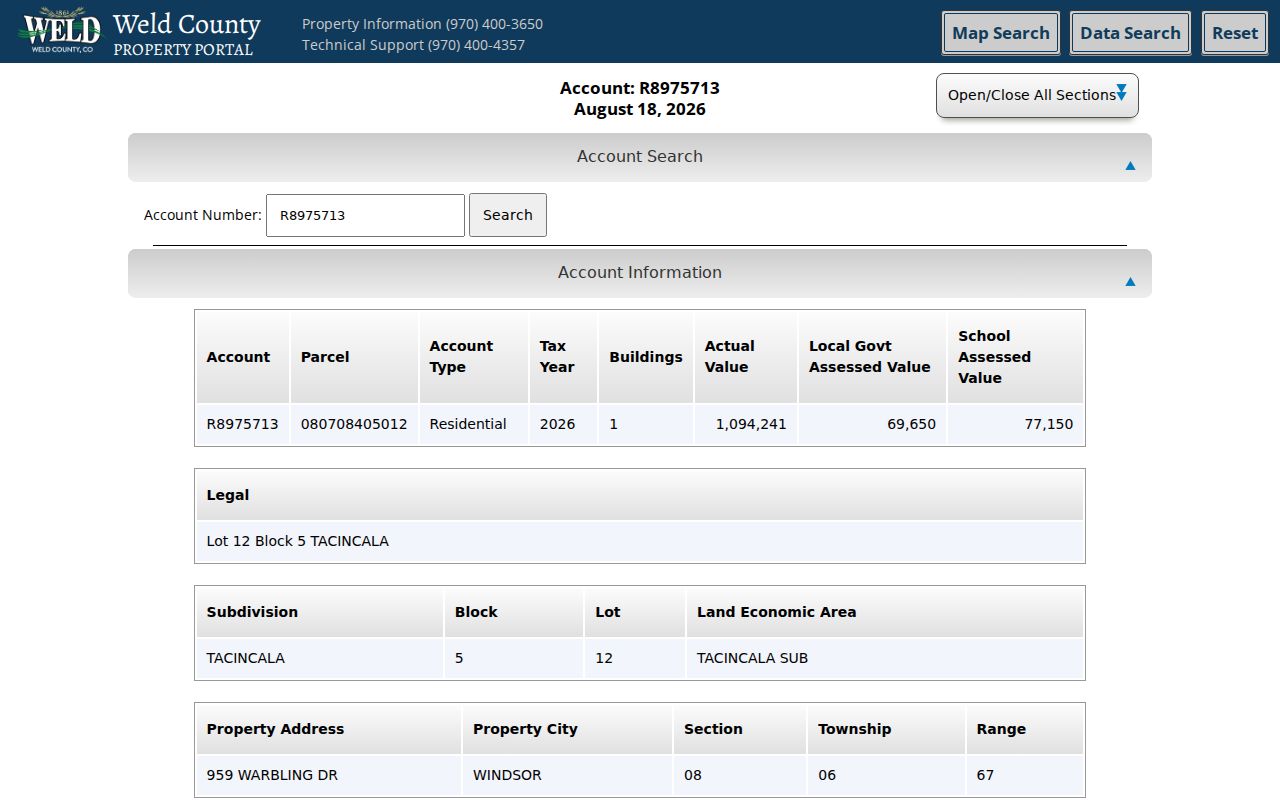
The report connects a current account to a situs address, owner list, mailing address, parcel and legal description, building data, value fields, map, tax route, and document history. It is a field example, not a reason to repeat private names or a full address in a public research note.
- Account and parcel numbers provide stable handoff keys between the Assessor, GIS, Treasurer route, and recorder.
- Situs address identifies the parcel location; the owner mailing address identifies where tax correspondence is sent.
- Subdivision, block, lot, section, township, range, land area, buildings, and year-built fields add historical comparison points.
- Document-history rows can expose reception numbers and dates that lead into the recorder index.
The Weld GIS Property Map is the spatial handoff. Search or click the parcel, save the account and legal description, then return to the report. A mailing address can differ from the situs address, and neither line alone proves who was physically present.
Weld County's Address Continuity Test
A rural address can change names without changing the land. Weld's official right-of-way research guide notes that a county road segment can carry several historic numbers and that WCR49 has different historic identifiers along different segments. The guide points to petitions, grants, segment records, and the 1937 road book. When a modern street search fails, test the county-road number, section-township-range, subdivision, block, lot, and legal description instead of treating the empty result as proof that no earlier resident existed.
Greeley needs a related check. The historic downtown grid around 8th Street between 8th and 9th Avenues, the courthouse at 915 10th Street, a Sanborn sheet, and a directory page can anchor an older address to a modern parcel. A street number may be printed differently after a change, while a lot, block, or legal description can preserve continuity across the change.
Weld County Deed Rows and Images
A public sample document-history row for Account R8975713 shows Reception 5022130, recording date 04-10-2025, instrument code SWDN, and a sale date of 04-09-2025. A preceding row shows Reception 4928005, dated 10-27-2023, with instrument code SWD. The useful lesson is the shape of the index row, not the private parties or address attached to the sample.
| Account key | R8975713, used to open the parcel report |
|---|---|
| Reception number | 5022130, the recorder's indexed instrument key in the sample |
| Recorded date | 04-10-2025 |
| Instrument code | SWDN; expand the code from the original document or county help, not from initials |
| Earlier row | Reception 4928005, 10-27-2023, instrument SWD |
| Authoritative check | Read the linked image or order the original before relying on legal wording |
The index is free, but copies and images follow the Clerk and Recorder fee schedule. Online copies are $0.50 for the first page and $0.25 for each added page; in-office and mail copies are $0.25 per page, and certification is $1 per document. Standard recording is $43. The office accepts in-person, mail, FedEx, UPS, and authorized eRecording channels.
The Weld County recording FAQ route is the source for document-history and copy guidance:
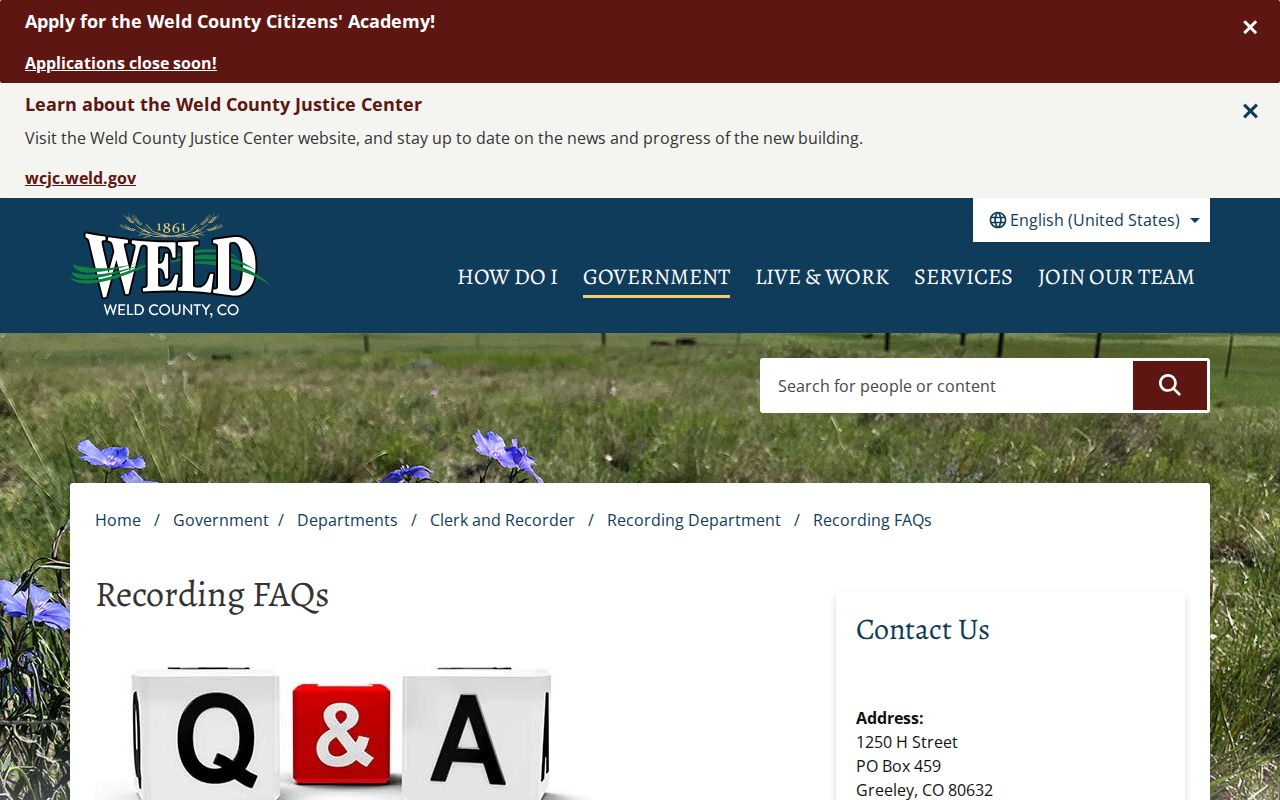
The image belongs after the sample row because the index supplies a lead, while the custodian and original instrument supply the legal text.
Rural Roads and Weld County Past Residents
The road-number quirk matters most outside the city grid. A modern delivery address can hide a former county-road number, a segment-specific alias, or a legal description that appears only in a plat or deed. Search the current parcel by section-township-range, write down the legal description, and then test the historic road number in the 1937 road book before deciding that a prior address is missing.
For a Greeley property, align the historic city grid, the Sanborn sheet, and the directory line. For a rural parcel, align the county-road segment, the section-township-range, and the plat or recorder instrument. The address string is a useful entry point, but the land description is the stronger bridge between eras.
Pairing Weld County Directories With the Census
Ownership is only one part of previous residents research. The 1892 F.C. Messinger volume and April 1903 Greeley City Directory can supply household and address clues, while later or earlier reverse and criss-cross volumes need a catalog check because exact years were not located. A directory can name someone at a place without proving title, which is why the household layer must sit beside the recorder chain. Previous residents research is strongest when the household clue and title record are kept distinct.
A practical pairing sequence keeps the two record types in their proper roles.
- Choose a directory year near the question and copy the exact street spelling, number, household line, page, and abbreviation key.
- Test the name in the alphabetical section, then compare the nearest census year and the 1885 Colorado State Census when the timing fits.
- Use the 1900, 1910, 1920, 1930, or public 1950 census material to compare household members, ages, birthplace, and address area.
- Search the Greeley Tribune, WCMI, and an obituary or cemetery source for a move, death, relationship, or later address.
WCMI lists 1900 reel T623-130, 1910 reels T624-126 volumes 40 and 41, 1920 Greeley reel T625-173, and 1930 reels T626-251 and T626-252 with enumeration districts. A directory may be annual and a census decennial, so a gap between them is normal. Keep the page and reel reference with the source date.
Weld County House History at Greeley Repositories
The official Greeley house-history sequence gives a sound order for a property story. Start with the current address and legal description, then add household sources before treating a transfer as a conclusion.
- Establish the current address, parcel account, legal description, and map position.
- Consult city directories and census schedules for people and household timing.
- Search newspapers and obituaries for moves, deaths, family, and address phrases.
- Inspect Sanborn maps and historic surveys for the building and street context.
- Verify transfers in the recorder, then use probate or estate records when an heir or representative appears.
Hazel E. Johnson at 714 8th Street, the High Plains Library archive at 2650 West 29th Street, UNC Michener L119 at 501 20th Street, CSU's 1856-1992 finding aid, State Archives, and the Greeley History Museum each hold a different slice. Ask for a directory year, source code, road series, probate group, or newspaper date rather than a generic people file. The Weld Self-Service Recording Search disclaimer provides the search boundary:
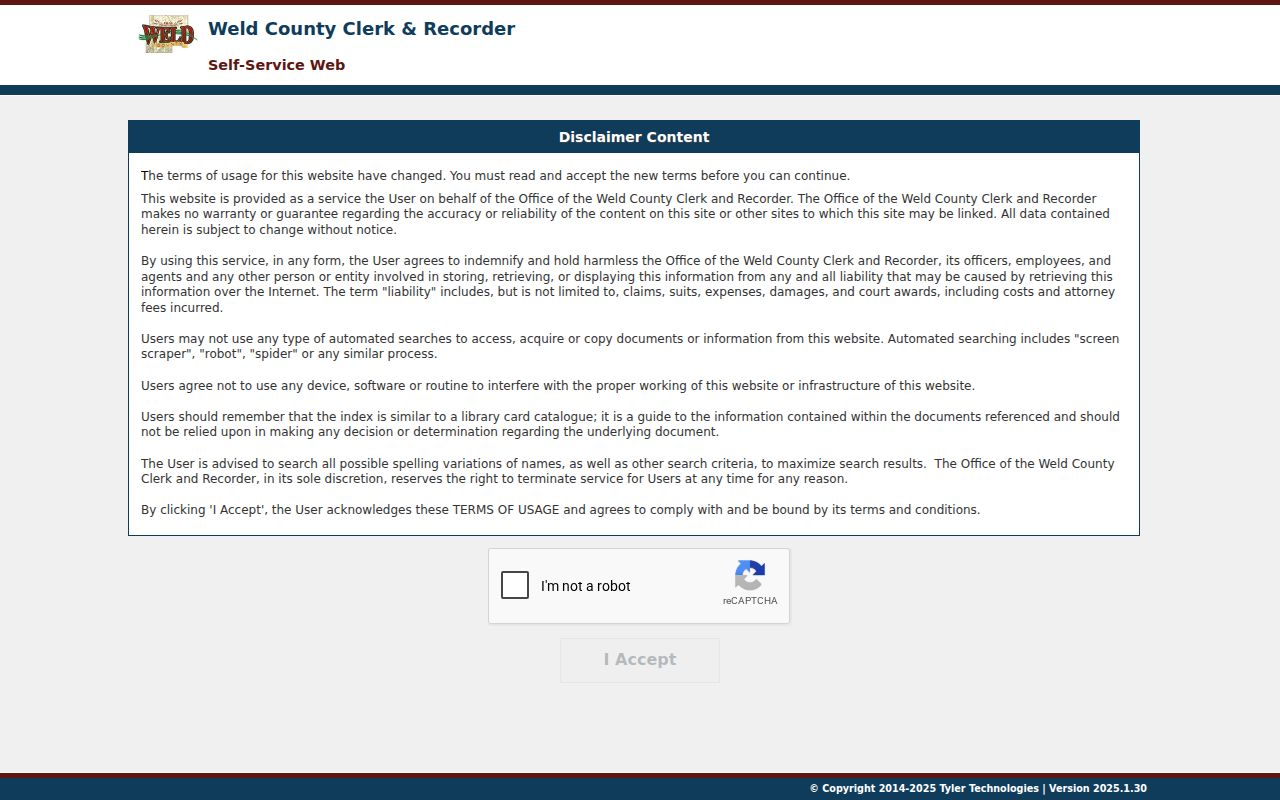
That access route supports a documented house history when each result is tied to an account, reception number, source page, or repository citation.
Sanborn Maps and Weld County Past Residents
Sanborn sheets help date the structure that appears beside a household name. The located Greeley set includes June 1886, December 1887, January 1891, October 1895, January 1901, January 1906, October 1909, January 1918, April 1927, a September 1946 update, and an August 1968 update.
Use a Sanborn sheet to compare footprint, building use, materials, street numbering, and neighborhood change. Then pair the map with a directory entry, the parcel legal description, and a recorded instrument. The map does not prove who lived there, and the city directory does not prove ownership. Together they can explain why an old address looks different from a current one.
Previous Residents in Obituaries and Probate
Obituaries and probate often close the backward trail. Heritage Hub reaches into historical newspaper material and funeral-home notices, while the Colorado Historic Newspapers Collection and Greeley Tribune holdings add address, death, marriage, and family phrases. Linn Grove Cemetery, established in 1874, is at 1700 Cedar Avenue in Greeley; its city office and linked cemetery route can be paired with the State Archives' Linn Grove Burial Applications from 1912-1930. A burial index is a lead, so confirm it with the cemetery, newspaper, or original application.
Probate is a court record set, not a recorder index. The 19th Judicial District and State Archives can point to estate files, representatives, affidavits, and heirs when a prior owner died or transferred property through an estate. Colorado's vital-record rules also matter: an obituary is not a certificate, and a family-history search should follow the custodian's access rule rather than infer a private fact from an address.
Lawful house history. Previous-resident records are suited to house history, family history, estate research, and personal curiosity. Do not use an address trail to harass, track, or expose a living person, and leave protected or confidential addresses out of public notes.